

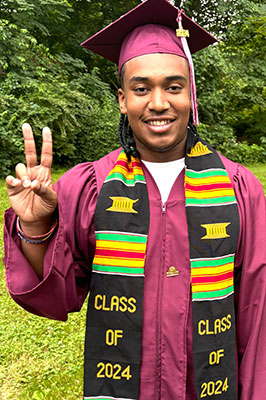
Alumni
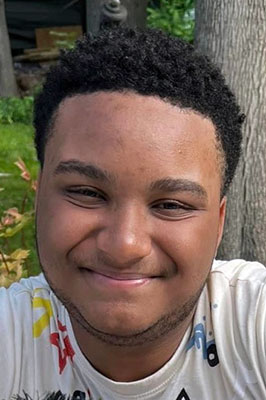
Joel Blandon | 2023
Bronx, NY
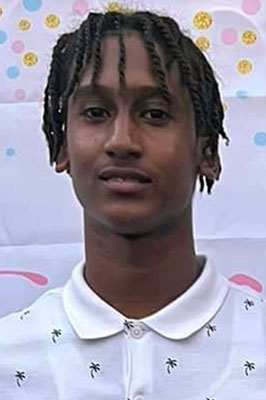
Azumir Medina | 2022
Pawtucket, RI
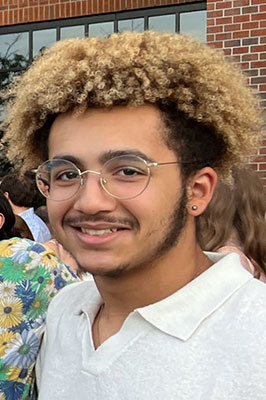
Daniel Molina Jr. | 2021
Maplewood, NJ
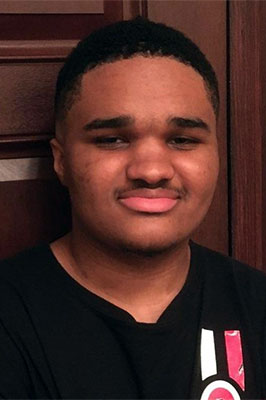
Matthew Tyndell | 2021
Bridgeport, CT
Roshawn Jacobs | 2019
Paterson, NJ
Pierre Tilus | 2019
Occoe, FL
Honore Mandiamy | 2018
Bronx, NY
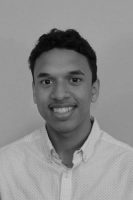
Jonathan Rosario | 2018
New York, NY
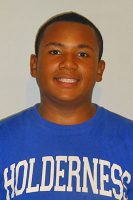
Nicholas Rivera | 2017
New York, NY
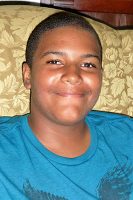
Christopher Maldonado | 2017
New York, NY
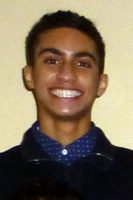
Josiah Vasquez | 2016
Bronx, NY
The A Better Chance program allowed me to continue to challenging myself academically while also giving me the ability to try and experiment with new things. Little did I know that these things would become my passions at the end of my four years in Amherst. With this, the A Better Chance program directly assisted in my growth and future as a homosexual Afro-Latino today in society. (June 2016)
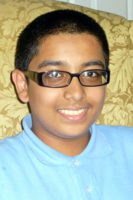
Parmeshwar Sasenarine | 2016
Queens, NY
Coming to Amherst A Better Chance has been a dream come true, and I am gaining a vast amount of knowledge not only in the classroom, but also in becoming more independent. Attending Amherst Regional High School has given me the confidence to demonstrate my leadership skills through being the president of Gardening in Environment Action Club, and to be a person who is not afraid to speak the truth. This house has given me the experience of a lifetime, and I am learning things I would not have at home in Queens, NYC. No longer am I another kid struggling through high school in New York, but I am now a strong, independent scholar who can strive for even the biggest of dreams. I have ABC to thank for that, and I am grateful. (June 2016)
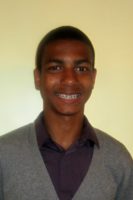
Larenz Harris | 2015
Bronx, NY
Being in the ABC program at ARHS is great and important to me. The main reason I came here was for acting. When I grow up, I want to be an actor. That’s my main focus. I participated in the musical and other chances I get to act. I also like the variety of classes I can take such as Wood Technology, Acting, World of Dance, etc. With sports, I got the chance to try something new: cross country. It was great, and so is the track and field. Being away from home was a little hard, but over time I learned to deal with it. I don’t think I would have been able to have an experience like this in New York City. (June 2015)
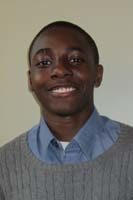
Terence Hector | 2015
Brooklyn, NY
Joining the ABC Family was a major step in the right direction for me. Though leaving my family was a challenging decision, I feel that there could have not been a better decision. Also, it was an opportunity for me to open up to a new set of people and a new environment. I have now been able to witness the differences in education for different places and I am glad to be in a place where education is on the high side of the bar. Amherst A Better Chance was an open opportunity for me to enhance the two most valuable things in my life – education and networking!! (June 2015)
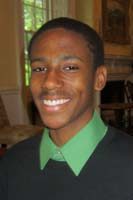
Brandon Mclean | 2014
Brooklyn, NY
To me, being an ABC scholar is very important. It gives me an incentive to work my hardest because I have so many people around me who want and believe that I can do well. As an ABC scholar I can do well. As an ABC scholar I feel that I always have someone behind me in any situation. I love it. (June 2014)
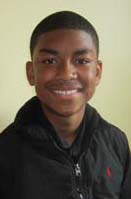
Jalen Bryant | 2014
New London, CT
Being at the ABC House with the rest of the guys and the RDs has been life-changing for me. I knew that going to a new school in a new state away from my family would not be the easiest task, but the support I have gotten from the community in Amherst has aided me in my transition. The school work here is a lot more challenging, but I am willing to take it on. I have read books and used equipment in school that I never would have back in New London, CT. My second year here is coming to an end, but I can’t wait for the rest of high school and beyond. (June 2014)
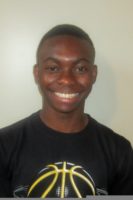
Devin Clarke | 2013
New Haven, CT
Being an Amherst ABC scholar is important to me because I like the challenging curriculum of the high school and the sports teams. I like the fact of making new friendships and maintaining old ones with my track and soccer teammates. I am excited and looking forward to my life after high school in college. (June 2013)
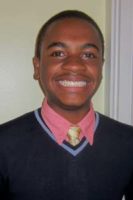
Najee Jones | 2012
Mt. Vernon, NY
For me personally, being an Amherst ABC scholar, it’s helped me really prepare for the next chapter in my life, which is college. I feel like A Better Chance makes you an overall better person and makes you more self-sufficient and more adult-like. When I say more adult-like, I mean you develop many skills that adults have: independence, responsibility, honesty, a hard-working attitude, and many other qualities that are beneficial. Being an ABC scholar has really been truly “A Better Chance”, and one that I can honestly say I will enjoy, love, and appreciate for the rest of my life. (June 2012)